



-
Geotechtronics GmbH
Pollinger Str. 3 • D-82362 Weilheim i.OB -
Office hours
Mo-Sa: 9:00-18:00
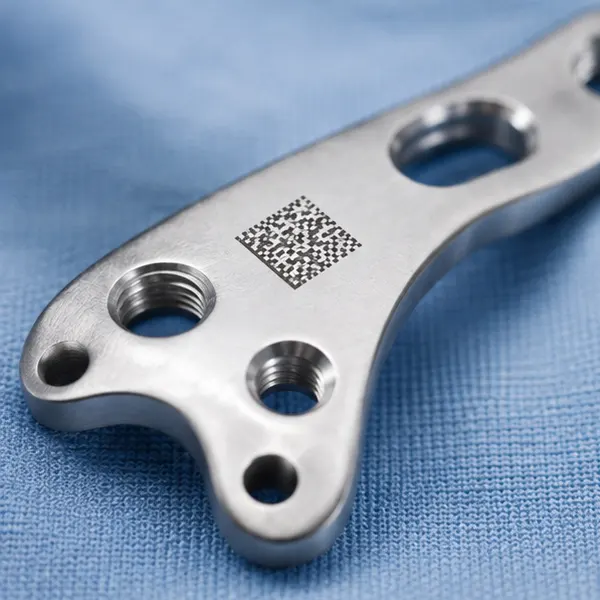
Component marking is an important part of modern production and manufacturing processes. Individual components, parts and workpieces often need to be clearly identifiable. For this purpose, information such as part numbers, serial numbers, batch numbers, production data, logos or machine-readable codes can be applied directly to the component.
Reliable component printing and marking not only enables products to be clearly identified, but also supports traceability, quality assurance and efficient organization within production. Depending on the material, application and required durability, different marking technologies can be used.
Why is component marking important?
In industrial manufacturing, components often need to be uniquely identifiable throughout the entire product lifecycle. This applies, for example, to components used in mechanical engineering, the automotive industry, electrical engineering, medical technology or plant engineering.
Marking can contain information such as:
- Article and part numbers
- Serial numbers
- Batch numbers / Lot coding
- Production and manufacturing data
- Manufacturer information
- Logos and product information
- QR codes
- DataMatrix codes
- Barcodes
- Individual traceability data
Machine-readable codes are particularly important in automated production processes. They enable components to be captured quickly and can be linked to production, quality management or inventory management systems. This makes it easier to ensure the traceability of components across different production and logistics stages.
Requirements for industrial component marking
Good marking must not only be easy to read, but also suit the respective application. The appropriate marking technology depends on factors such as the material, surface characteristics, production speed and environmental conditions.
Various factors should therefore be considered when selecting a suitable component marking system:
- What material needs to be marked?
- How large can the marking be?
- Is variable data required?
- Does the marking need to be permanent?
- Does the marking need to be machine-readable?
- What temperatures and environmental influences will the component be exposed to?
- Does the marking need to be resistant to abrasion, cleaning agents or chemicals?
- Does the marking system need to be integrated into an existing production line?
Depending on the requirements, printing processes, laser marking, engraving or other industrial marking technologies can be used.
Marking components with serial numbers and codes
The individual marking of each component is particularly important for traceability. Instead of applying only a general part number, each workpiece can, for example, be assigned its own serial number or an individual DataMatrix code.
This makes it possible to determine when and under what conditions a component was manufactured. Information about batches, production lines or quality inspections can also be linked to the respective marking.
Compact, high-resolution markings are particularly suitable for small components. Modern marking systems can apply not only text but also barcodes, QR codes, DataMatrix codes and graphics.
Component marking on different materials
The requirements for marking vary considerably between different materials. Metal, plastic, glass, painted surfaces and coated components may each require different marking processes.
For metal parts, particularly durable marking is often the priority. In such cases, laser marking or laser engraving can be used, for example.
For plastic components, the type of plastic and the required durability are particularly important. Different printing and laser marking processes may also be suitable in this case.
For cardboard, packaging and certain plastic surfaces, industrial inkjet printing is often a suitable option.
Component marking with TIJ
An interesting option for industrial component marking is TIJ (Thermal Inkjet). This technology uses a printhead to eject extremely small ink droplets through its nozzles. Modern TIJ systems can produce high-resolution prints and can be used to apply text, logos, barcodes, QR codes and DataMatrix codes, among other things.
One advantage of TIJ technology is its flexibility. Variable information such as serial numbers, batch numbers or production data can be applied directly during the production process. Depending on the ink used and the surface, different materials can be marked.
TIJ systems can be used both as stationary systems in production facilities and as mobile handheld printers. This makes them suitable for a wide range of requirements in industrial component marking.
Permanent Component Marking with Laser Engraving
When particularly durable and long-lasting marking is required, laser engraving can be a suitable solution. The laser processes the surface of the workpiece without physical contact and enables highly precise markings.
Depending on the material and process, information such as serial numbers, part numbers, logos, QR codes or DataMatrix codes can be applied. Laser markings are frequently used where the marking needs to withstand mechanical stress, cleaning processes, oils or other environmental influences.
Another advantage is that laser marking does not require printing ink. This makes the process particularly suitable for applications where permanent and low-maintenance marking is required.
TIJ or Laser Engraving – Which Process Is Suitable?
Whether TIJ printing or laser engraving is the better solution cannot be determined universally. The key factors are the material, marking content, required durability and production process.
TIJ is suitable, for example, when flexible and variable information needs to be printed quickly onto different surfaces. The technology can offer particular advantages when working with changing data, barcodes and QR codes.
Laser engraving or laser marking, on the other hand, is particularly interesting when highly durable marking without consumables is required and the marking needs to remain reliably legible even under demanding environmental conditions.
Consulting and Products for Component Marking – We Are Happy to Help
Professional component marking provides the basis for clear identification and reliable traceability of workpieces and components. From simple part numbers and serial and batch numbers to QR codes and DataMatrix codes, there are numerous options available.
For flexible industrial marking, TIJ (Thermal Inkjet) can provide an economical, high-resolution solution. When particularly durable marking is required, laser engraving or laser marking is often a suitable option. The appropriate process should always be selected based on the material, production conditions and marking requirements.



Copyright ©Geotechtronics GmbH, GERMANY • Handheld mobile printer - portable printing solution.