



-
Geotechtronics GmbH
Pollinger Str. 3 • D-82362 Weilheim i.OB -
Office hours
Mo-Sa: 9:00-18:00
Professional labelling for plants and plant products
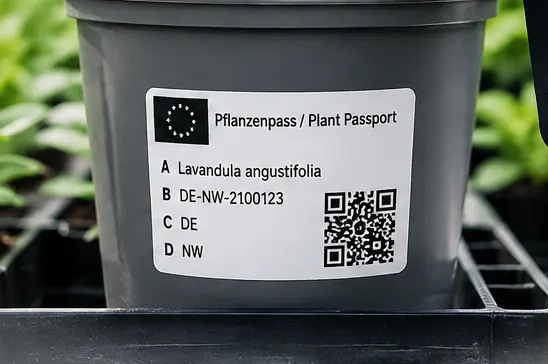
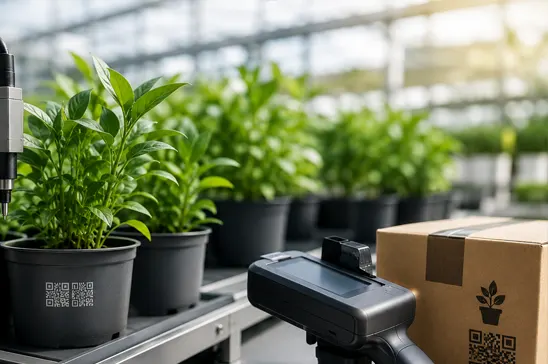
The plant passport (EU plant passport) is required by producers and exporters of plants and plant products within the European internal market. Without a plant passport, trade in such goods is no longer permitted in the EU. The plant passport is required not only for potted edible plants, but also for seeds or roses, for example. The labelling includes, among other things, the registration number (business registration number), the indication “plant passport”, a unique serial number, the name of the plant, and in the case of products from third countries, the country of origin. In addition, further information may be required on the plant passport, for example when moving goods into protected zones. The passport must be applied to the smallest packaging unit, such as the pot or tray.
Especially for smaller businesses, printing plant passports can present challenges, as the necessary investment in production systems initially appears high. This is particularly true when packaging and labelling processes are not yet automated. Suitable printers for plant passports include labelling systems or direct printing systems. When printing directly onto packaging units, a distinction is made between stationary systems (integrated into conveyor lines) or manual solutions (e.g. handheld printers).
Handheld printers for plant passport printing - plant labelling
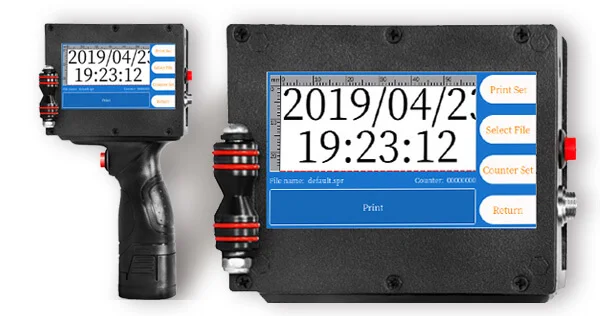
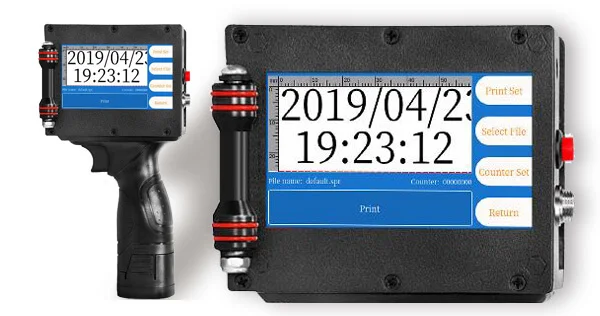
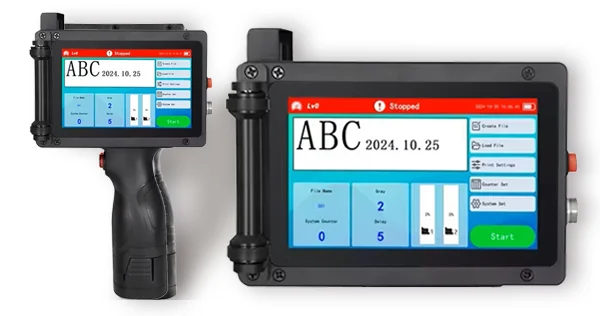
For small batch sizes or highly variable products (size, shape, material, etc.), stationary systems can quickly become expensive and complex. In addition, there is not always enough available space to install such systems. In these cases, modern handheld printers are a real alternative. These lightweight, portable devices almost always use the proven TIJ technology from Hewlett Packard. The print cartridges contain both the printhead and the associated electronics, which can be used in different control units. This enables the miniaturisation required for truly portable devices.
With our NasaJet® NJ-100, NJ-200 and NJ-500 models, we offer three variants for slightly different application scenarios. The entry-level model NJ-100 allows print heights of approx. 12 mm (0.5 inch) and is sufficient for many everyday labelling tasks. For larger print formats, the NJ-200 and NJ-500 models achieve print heights from 1 inch (25 mm) up to 2 inches (50 mm).
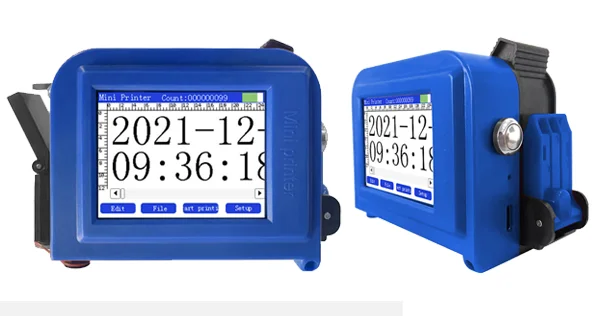
For plant passport printing, a specific layout is mandatory, which also includes the EU flag. Therefore, our handheld printers are also capable of graphic printing (monochrome). In addition, any combination of graphics, logos, text, serial numbers, barcodes, and QR codes can be created and printed. Print templates are created and stored directly on the device via an integrated touchscreen, so no external software is required. External data (such as logos) can be saved to the printer via USB for later use. A backup of stored data on the device is also possible.
Another key advantage is the flexibility and cost efficiency of handheld printers for plant passports. A wide range of
materials can be printed on, including plastic pots, wooden trays, or foil packaging—often without changing the ink cartridge.
This means the handheld printer can also be used for all other labelling tasks. Thanks to the standardized TIJ technology, a
wide range of inks and specialty inks is available, reducing printing costs and increasing application flexibility. For plant
passport printing, we recommend high-quality inks from the manufacturer Mylan.
Handheld printers are very robust and largely maintenance-free due to their simple and proven mechanics and electronics.
NasaJet® nj-1000 and nj-2000 plant passport printers
For easy and fast integration into existing production and packaging lines, the NasaJet® models NJ-1000 and NJ-2000 are ideal.
The systems consist of a control unit with a touchscreen display and a separate print unit, which can be positioned independently.
This allows simple installation in virtually any conveyor system.
Using the proven TIJ principle, also used in our handheld printers, almost any material and surface can be printed.
In addition to plant passport labelling, the NasaJet models can handle many other marking tasks, including text, serial numbers,
QR codes, and simple graphics.
We are happy to demonstrate our NasaJet® marking systems in person. Just give us a call.
Frequently asked questions plant passport printing
What is a plant passport?
The plant passport documents, within the European Economic Area, that plants and plant products are free from quarantine pests.
What are the challenges of printing plant passports?
For small businesses in particular, the costs of printing plant passports can be relatively high. With a large product range, printing must also be very flexible. Handheld printers can be a useful alternative.



Copyright ©Geotechtronics GmbH, GERMANY • Handheld mobile printer - portable printing solution.