



-
Geotechtronics GmbH
Pollinger Str. 3 • D-82362 Weilheim i.OB -
Office hours
Mo-Sa: 9:00-18:00
Bag Labelling – Methods and Modern Solutions for Industry & Logistics
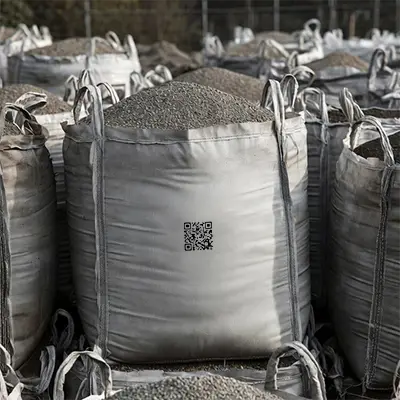
Bag labelling plays a central role in many industries. Whether in agriculture, the food industry, building materials trade, or the chemical sector – bags are among the most commonly used packaging solutions for bulk and powdered products.
Professional labelling not only ensures brand recognition, but also meets legal requirements and optimizes internal processes.
What is Bag Labelling?
Bag labelling refers to the permanent or temporary marking of packaging bags with relevant information. This information can either be printed directly onto the bag or applied afterwards.
Printing Logos, Dates, Weight, Batch Numbers, Barcodes, QR Codes or Instructions on Bags and Big Bags
Typical content of bag labelling includes:
- Company logo
- Product name
- Batch number
- Production date / Place of manufacture
- Expiration date
- Weight / Fill quantity
- Ingredients
- Hazard warnings
- Barcodes or QR codes
Depending on the industry and product, different labelling regulations apply. Particularly in the food sector (e.g. flour, sugar, animal feed) as well as in the chemical industry, clear and compliant information is mandatory.
Why is Professional Bag Labelling So Important?
1. Legal Requirements
Many products are subject to strict labelling regulations. Incorrect or illegible markings can lead to product recalls or legal consequences.
2. Traceability
Batch numbers and production dates enable complete documentation throughout the supply chain.
3. Brand Impact
Printed bags with logos and clear design strengthen brand image and build customer trust.
4. Efficiency in Warehousing and Logistics
Barcodes and machine-readable codes simplify inventory management, shipping, and stocktaking.
Materials and Special Considerations in Bag Labelling
Printing and Labelling Paper Bags, PP and PE Bags, as well as Big Bags
Bags are made from different materials, each of which places specific requirements on the printing process:
- Paper bags (multi-layered, commonly used in the food and construction industries)
- PP woven bags (polypropylene, particularly tear-resistant)
- PE bags (polyethylene, moisture-resistant)
- Big Bags (FIBC) for large filling quantities
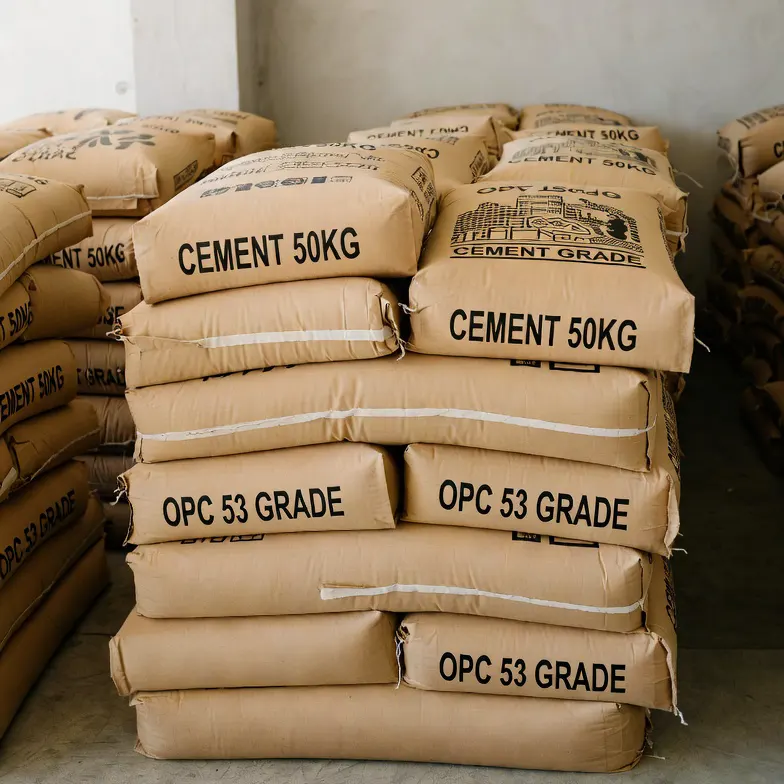
Depending on the surface (smooth, rough, coated, flexible), the marking system must be adapted. Especially with flexible or dusty surfaces, special inks and contactless printing processes offer clear advantages.
In bag labelling, an additional challenge is that the shape is usually irregular and can vary significantly from one item to another. A marking system for bag labelling must be able to detect and compensate for these inconsistencies and work reliably on both concave and convex surfaces.
Traditional Bag Labelling Methods
Flexographic Printing
A widely used process for large production volumes. The printing plate is individually produced, which can lead to higher costs when designs need to be changed.
Advantage: Cost-effective for high volumes
Disadvantage: Limited flexibility for variable data
Screen Printing
Particularly suitable for bold, opaque prints on challenging surfaces.
Advantage: High ink coverage
Disadvantage: Complex when content changes frequently
Labelling (Sticker Application)
Pre-printed labels are applied to the bag.
Advantage: Flexible for variable data
Disadvantage: Additional material consumption, potential peeling, extra costs
Stamp Printing
A simple method for basic markings such as batch numbers.
Advantage: Low cost
Disadvantage: Manual process, inconsistent print quality
Challenges in Modern Production Processes
In today’s production environments, companies face new requirements:
- Frequently changing batches
- Customized product variants
- Short production cycles
- Automated packaging lines
- Sustainability requirements
Traditional printing methods quickly reach their limits, especially when variable data must be printed in real time.
Modern Solution: TIJ Marking Systems for Bag Labelling
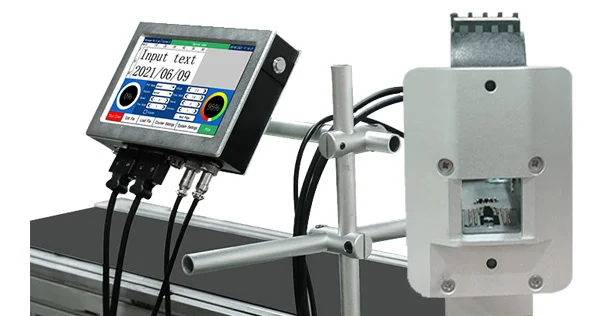
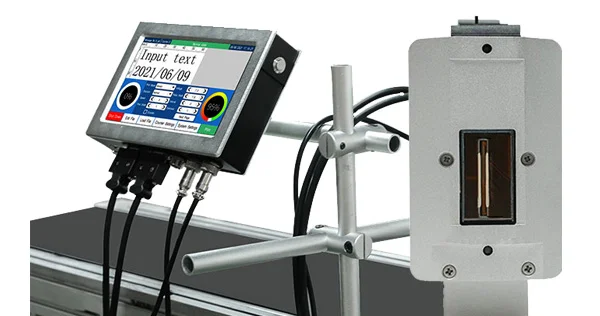
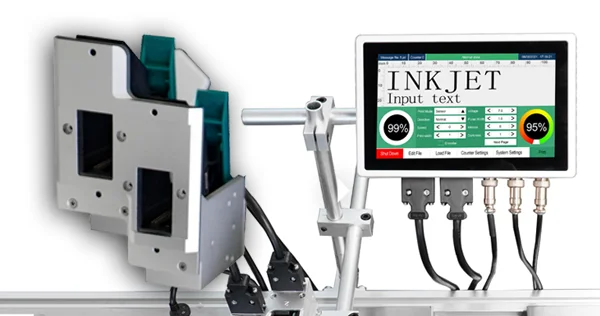
A particularly flexible and cost-effective alternative is offered by TIJ marking systems (Thermal Inkjet).
This technology is based on the same principle as office inkjet printers – but specifically designed for industrial applications.
Advantages of TIJ Marking Systems for Bag Labelling
- Contactless printing: Ideal for flexible or uneven bag surfaces.
- High print quality: Sharp, clearly readable codes, texts and logos – even at small font sizes.
- Variable data in real time: Batch numbers, expiration dates or serial numbers can be automatically generated from ERP or production systems.
- Low maintenance: Compared to complex industrial printing systems, TIJ systems require minimal maintenance.
- Quick integration: Easy integration into existing packaging lines.
TIJ Hand Printers – The Flexible Alternative for Small and Medium-Sized Businesses
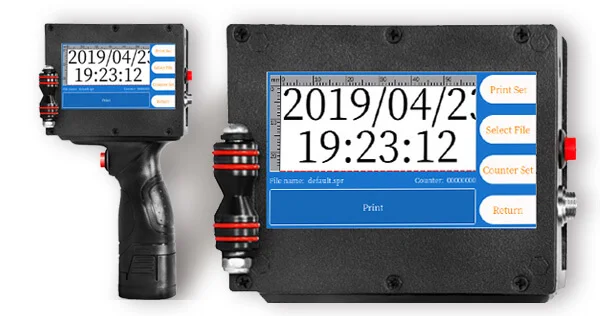
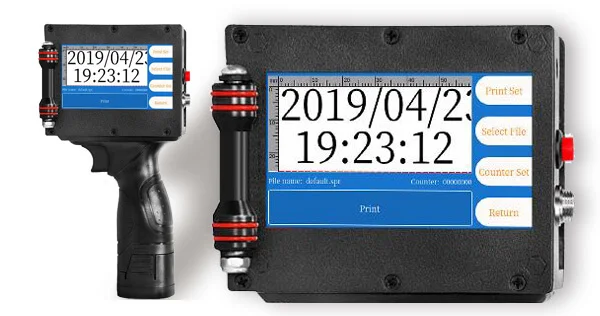
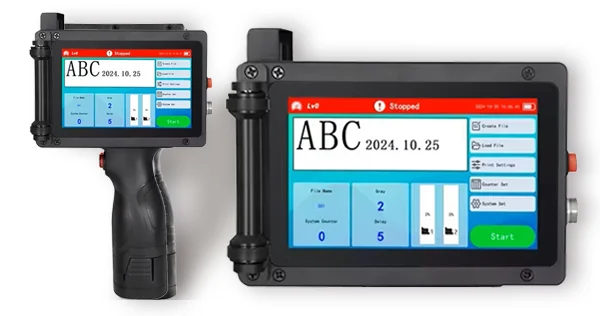
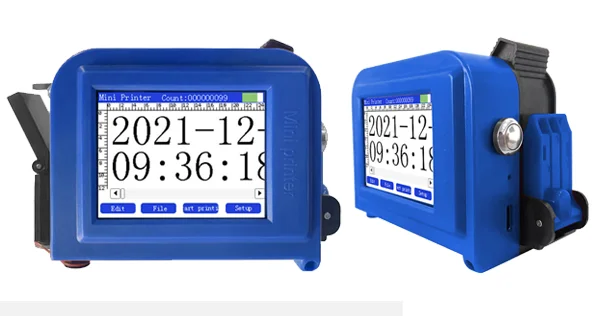
In addition to stationary systems, handheld printers with TIJ technology are particularly suitable for smaller production volumes or flexible applications.
These devices enable:
- Mobile bag labelling directly in the warehouse
- Marking of special batches
- Subsequent marking of Big Bags
- Flexible adjustments during product changes
Handheld printers are compact, easy to operate and require no complex installation. Especially for companies with variable production requirements, they represent an extremely cost-effective solution.
Why TIJ Marking Systems Are a Future-Proof Solution
Requirements for packaging labelling are continuously increasing. Topics such as:
- Traceability
- Digitalization
- Industry 4.0
- Sustainability
make flexible printing solutions essential.
TIJ systems enable precise, clean and resource-efficient marking without additional consumables such as labels or printing plates.
NasaJet® Marking Systems and Hand Printers for Cost-Effective Bag Labelling
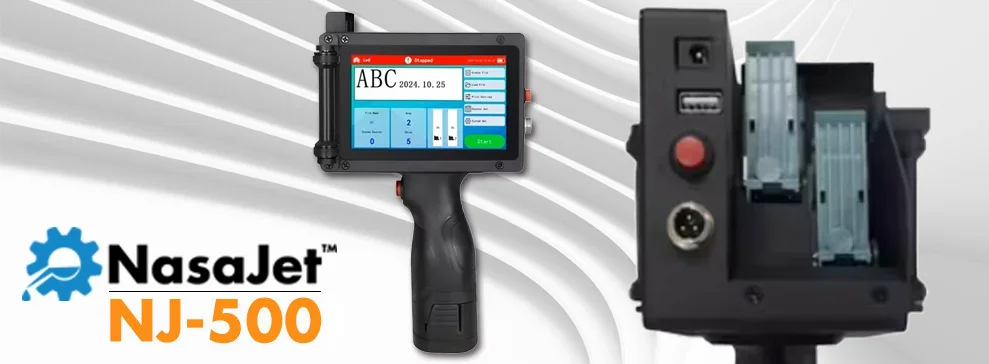
Professional bag labelling is far more than just a printed date. It is a decisive factor for product safety, brand presence, logistics processes and legal compliance.
While traditional printing methods still have their place, modern TIJ marking systems – and handheld printers in particular – offer a highly flexible, cost-effective and future-oriented alternative.
Companies that rely on efficient processes and variable marking benefit in the long term from this innovative technology – especially when print data changes frequently and production volumes are small to medium-sized.
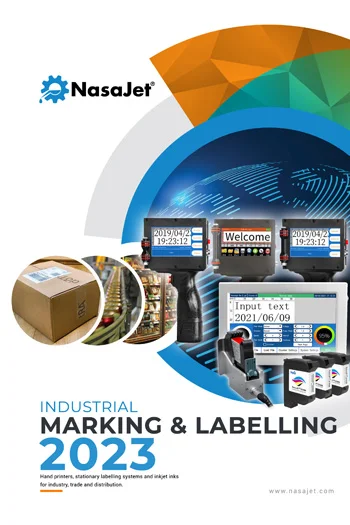
NasaJet® Brochure
"Industrial marking" 1,4 MB
NasaJet® NJ-500
Datasheet 0,5 MB
NasaJet® NJ-200
Datasheet 0,6 MB
NasaJet® NJ-100
Datasheet 0,5 MB
NasaJet® NJ-5000
Datasheet 0,5 MB
Advantages TIJ labelling
- Razor-sharp print image
- High print speeds
- Low printing costs
- Low noise level
- Practically maintenance-free
- Multiple print formats (text, date, counter, barcodes, QR codes, graphics,...)
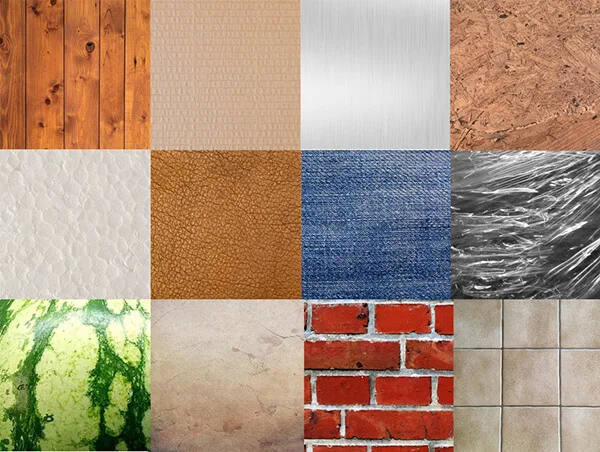
- Suitable for almost any substrate due to different inks (paper, plastic, metal, textiles,
rubber, wood,...)



Copyright ©Geotechtronics GmbH, GERMANY • Handheld mobile printer - portable printing solution.