



-
Geotechtronics GmbH
Pollinger Str. 3 • D-82362 Weilheim i.OB -
Office hours
Mo-Sa: 9:00-18:00
Non-contact marking allows industrial marking without damaging the product
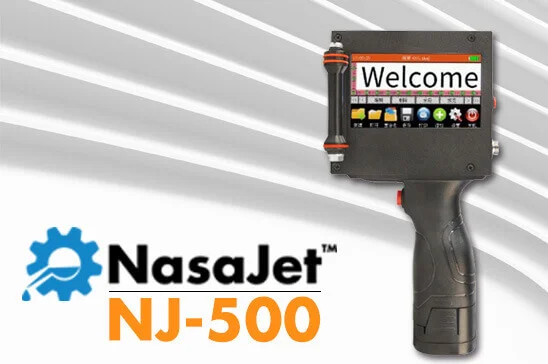
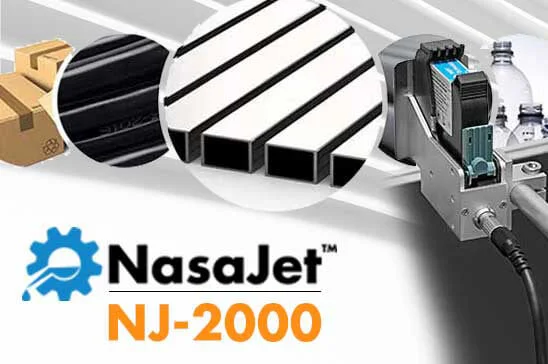
On the one hand, marking products in everyday industrial life is often necessary to meet legal requirements, but it can also be used to optimise your own sales and logistics. With more solid materials such as plastic, rubber, metal or wood, techniques such as engraving or laser are often used, but these naturally "damage" the surfaces. If you want to avoid this, the TIJ technology (Thermal Inkjet) from Hewlett Packard is also an efficient option for non-contact marking.
TIJ is based on the proven inkjet technology and differs from the domestic inkjet printer by combining ink cartridge and print head in a single housing. This solution makes printing more independent of the specific application and is the only way to effectively implement miniaturisation in printer technology - for example in hand-held printers. The complete printing technology for non-contact marking is thus separate from the printing logic. The print head is controlled via built-in contacts on the housing. This makes it possible to design and programme a wide variety of control units yourself. In the industry, TIJ has therefore established itself as the standard for the implementation of printing and marking tasks.
Non-contact marking with inkjet guns
The following YouTube videos set cookies as soon as they are clicked on. By clicking you agree to the setting of cookies.
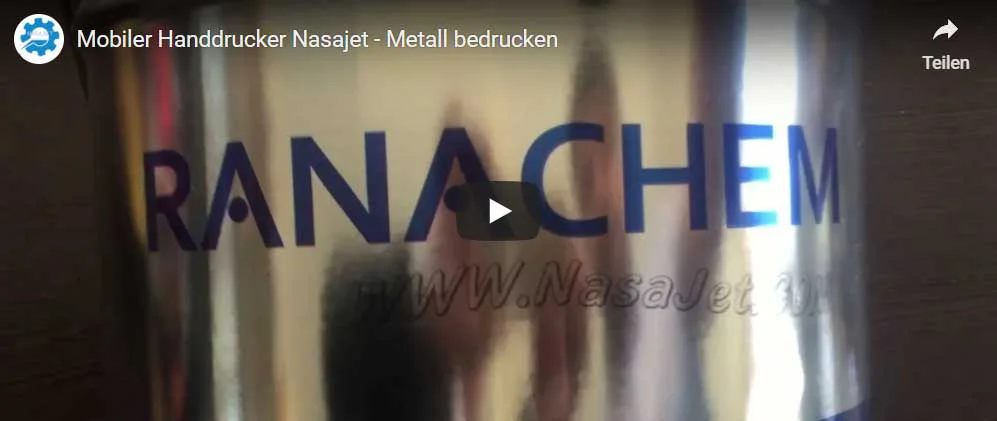
Metal
Plastics
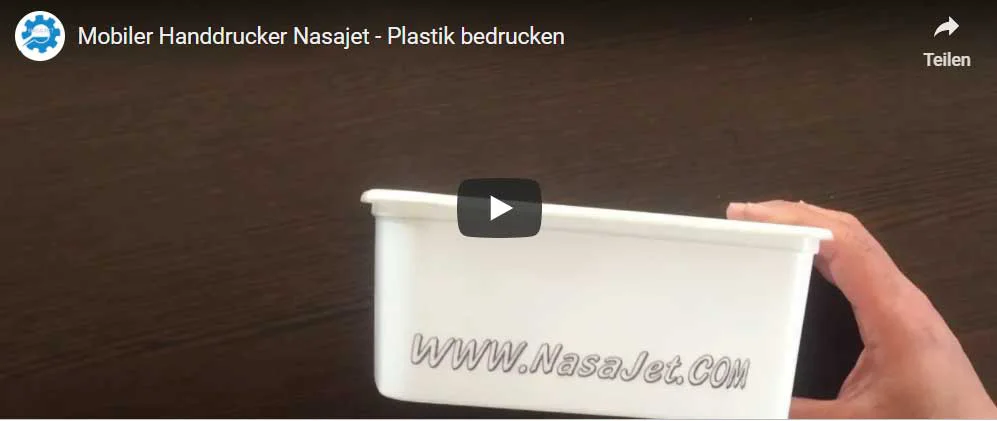
An inkjet gun is ideal for marking any objects and materials quickly, effectively and economically without contact. This technology can show its strengths especially in small to medium production quantities, because you can easily reach places that would be difficult to reach by machine, for example the inside of car rims or plastic pipes. If necessary, the exact print location can also be changed quickly, e.g. for knotholes in wooden objects. Non-contact marking also allows the use of a wide range of ink properties. For example, UV ink can be used for marking that is only visible under UV light, or the light resistance of the printouts can be flexibly varied.
Advantages of non-contact marking with TIJ technology
Non-contact marking with TIJ marking systems offers companies in modern production decisive advantages in terms of quality, efficiency, and flexibility. Especially in highly automated manufacturing environments, contactless coding is increasingly becoming the standard. TIJ (Thermal Inkjet) marking systems enable precise, clean, and low-maintenance product coding without direct contact between the printhead and the surface. This reduces mechanical wear, minimizes downtime, and ensures consistently high print quality.
A key advantage of non-contact marking with TIJ technology is the protection of sensitive products. Particularly with delicate packaging, flexible materials, or uneven surfaces, physical contact can cause damage. Contactless printing preserves packaging integrity and product quality while achieving consistently high print resolution. This allows for sharp barcodes, QR codes, batch numbers, expiration dates, and serial numbers.
TIJ marking systems operate using high-resolution inkjet technology that enables precise droplet placement. This is especially important for product traceability within modern quality management systems. Clear, machine-readable codes support automated scanning processes throughout the entire supply chain. Defective or illegible markings—often a challenge with contact-based marking systems—are significantly reduced through non-contact marking.
Another major advantage is the high level of integration flexibility. TIJ systems can be easily integrated into existing production lines and are compatible with conveyors, packaging machines, and robotic systems. Since no mechanical pressure is applied to the product, different product sizes and shapes can be marked without complex adjustments. This makes non-contact marking ideal for dynamic production environments with frequently changing formats.
Non-contact marking with TIJ systems also stands out in terms of maintenance and operating costs. Cartridge-based ink technology allows for quick and clean ink replacement without extensive cleaning procedures. Because there is no direct contact with the product, there is less buildup and mechanical wear. This increases equipment availability and reduces long-term maintenance costs.
In addition, contactless coding supports compliance with regulatory requirements in industries such as food, pharmaceuticals, cosmetics, and electronics. Permanent, clearly legible markings are essential for legal compliance, traceability, and product safety. TIJ marking systems deliver reliable printing results even at high production speeds.
NasaJet® hand printer for non-contact marking
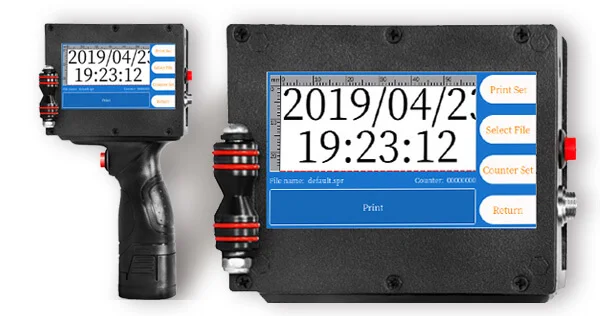
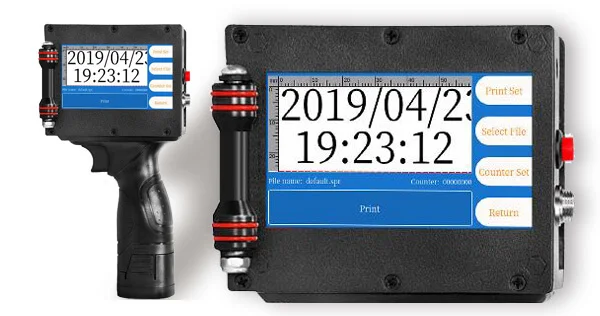
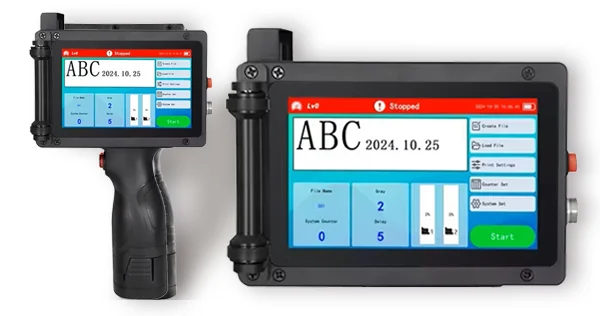
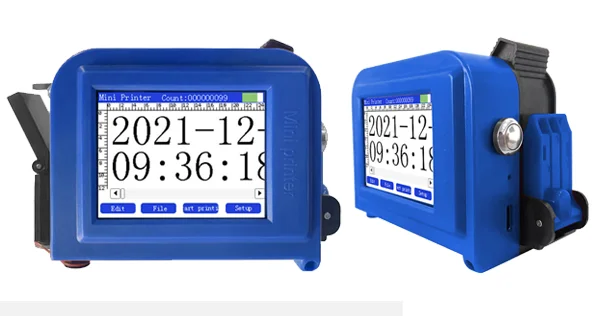
The NasaJet® handheld printer is the right choice if you frequently need to mark products or packaging. In the warehouse, at the production site or even in the shop, the cost-effective inkjet hand printer can quickly and economically mark anything with any data or even images. Whether it's expiry dates, serial numbers or service information, the NasaJet® makes non-contact labelling easy. Multi-line printing, printing of images, barcodes or consecutive numbers - the NasaJet® has everything you need for everyday industrial use. The print templates are created quickly and conveniently directly on the device with the help of the built-in touch screen and stored internally. Graphics and logos can of course be transferred to the machine via USB stick.
NasaJet® NJ-2000 non-contact marking system
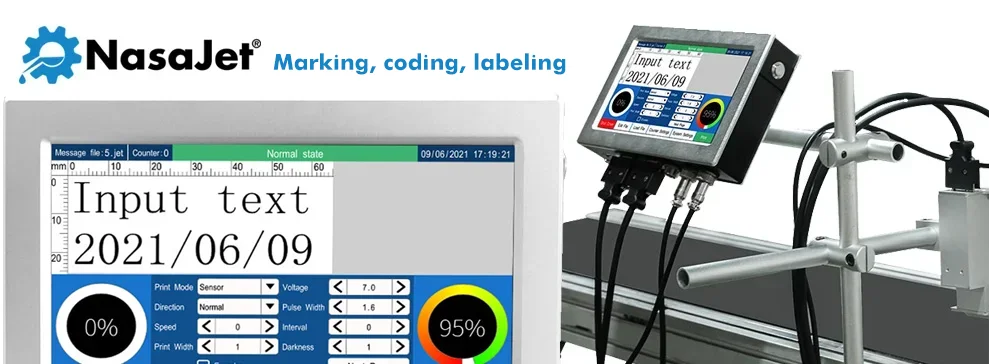
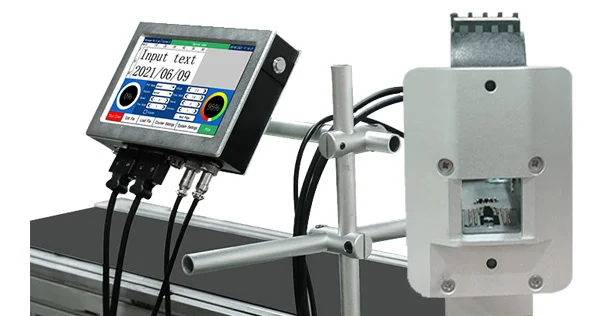
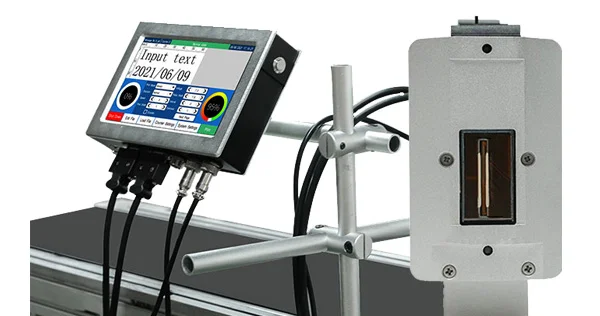
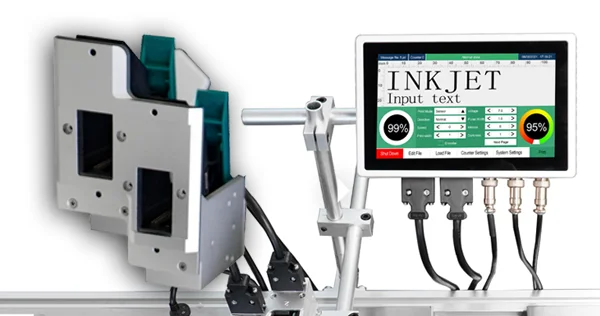
Even for larger production volumes and existing production facilities, we offer the NasaJet® NJ-2000, a professional yet economical
marking system for printing on plastic, rubber, cardboard, wood or other surfaces. The separate control and print units of the NasaJet®
NJ-2000 allow a quick and easy installation into existing production lines with a maximum print speed of up to 60m per minute. The print
units can be flexibly positioned to allow simultaneous printing of different pages at the same time.
The control unit allows the creation of even complex print templates directly via the built-in touch screen. Contactless labelling
with necessary information such as expiry date, serial numbers or barcodes is thus possible in a fully automated way - and the labelling
costs still remain economical.
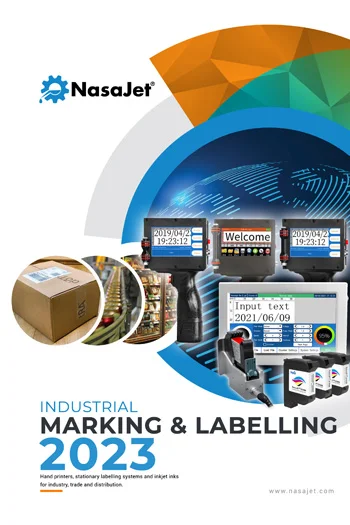
NasaJet® Brochure
"Industrial marking" 1,4 MB
NasaJet® NJ-500
Datasheet 0,5 MB
NasaJet® NJ-200
Datasheet 0,6 MB
NasaJet® NJ-100
Datasheet 0,5 MB
NasaJet® NJ-5000
Datasheet 0,5 MB
Advantages TIJ labelling
- Razor-sharp print image
- High print speeds
- Low printing costs
- Low noise level
- Practically maintenance-free
- Multiple print formats (text, date, counter, barcodes, QR codes, graphics,...)
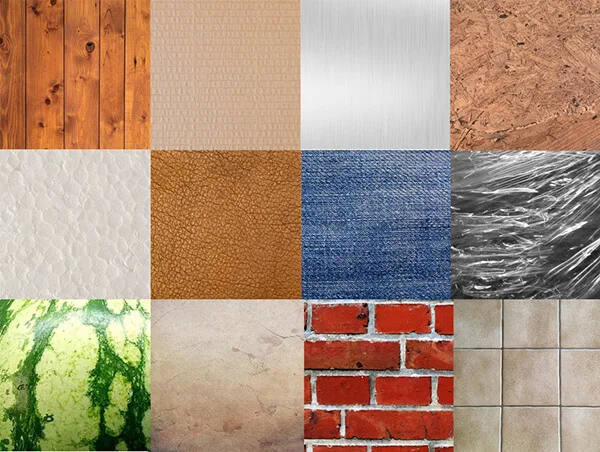
- Suitable for almost any substrate due to different inks (paper, plastic, metal, textiles,
rubber, wood,...)



Copyright ©Geotechtronics GmbH, GERMANY • Handheld mobile printer - portable printing solution.