



-
Geotechtronics GmbH
Pollinger Str. 3 • D-82362 Weilheim i.OB -
Office hours
Mo-Sa: 9:00-18:00
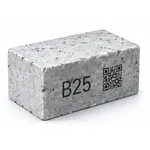
Typical Applications
- Precast concrete elements & paving stones
- Bricks & masonry blocks
- Insulation materials & polystyrene boards
- Wooden components & construction panels
- Plastic pipes & building profiles
How We Can Help You with Marking Building Materials:
Products
Our extensive range of TIJ marking systems includes both stationary and handheld devices.
Consulting
We plan and implement customised printing solutions tailored to your specific requirements.
Inks & Accessories
Our extensive range of high-quality TIJ inks ensures excellent printing results.
We're Here to Help:
Would you like a print sample for your specific application?
Simply send us a sample of the material or product to be printed, after consulting with us, and we will send you back a sample with the corresponding print.
Just get in touch and we'll explain how the process works.
Professional Printing and Marking of Building and Construction Materials
At a time when the construction industry is booming, it is becoming increasingly clear which companies have invested in efficient logistics and digitalisation. Fast delivery is more important than ever, while maintaining full traceability of goods. It is equally important that building materials can be processed quickly at their destination, as intermediate storage both time and money.
This makes it particularly important to mark building materials clearly and accurately. Proper marking enables fast identification and allocation, prevents errors and improves logistics throughout the supply chain. A good example is the marking of components used in prefabricated houses. With tight construction schedules, it is essential that all associated components arrive at the right place at the right time. Building materials must therefore be easy to locate and clearly identifiable. This ensures that every component is available exactly when it is needed, allowing the construction process to proceed as planned.
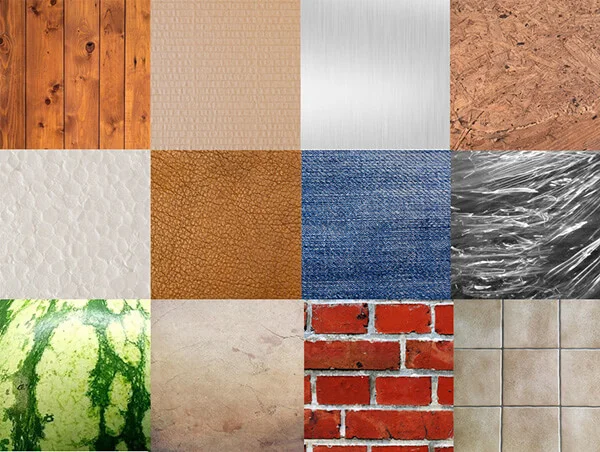
When marking building materials, the challenge lies not only in the often large quantities involved but also in the wide variety of surface types and textures. Wood and precast concrete elements can be marked easily in various ways. Plastic packaging for gravel, stones or pallets can be more challenging. Extruded products such as cables and pipes can also be difficult to mark using conventional methods. Modern inkjet handheld printers are therefore particularly well suited to marking building materials. Their flexible printing capabilities make it possible to accommodate different material characteristics. A wide range of specialised inks allows printing on almost any type of surface. Special ink properties, such as water resistance, UV resistance or invisible printing, are also available.
To integrate building material logistics efficiently with other systems as part of digitalisation, printers should also support QR codes and barcodes – ideally including dynamic codes. This not only simplifies marking but also improves the traceability of goods throughout the supply chain.
Handheld Printers for Marking Building Materials
The purchase and operating costs of handheld printers are relatively low today. Their greatest advantage is their flexibility. Provided the appropriate ink is used, several different marking tasks can be carried out with the same device. For example, individual wooden beams can be marked, the shrink wrap on a completed pallet can be printed directly, and the same data can then be transferred to the delivery note (paper). This saves time and effort. Almost every conceivable substrate can be printed using standard or specialised inks. Printing is therefore not limited to typical building materials such as wood, stone, concrete or glass. Rubber, plastic, polystyrene, leather, cardboard and many other materials can also be printed. The devices use contactless TIJ technology, which makes it possible to mark irregular, uneven or curved surfaces.
Inkjet handheld printers are also highly economical to operate. Since the printed information usually consists of text and does not generally need to remain legible for very long periods, ink consumption can be kept relatively low. Handheld printers for marking building materials also offer long battery life and are virtually maintenance-free.
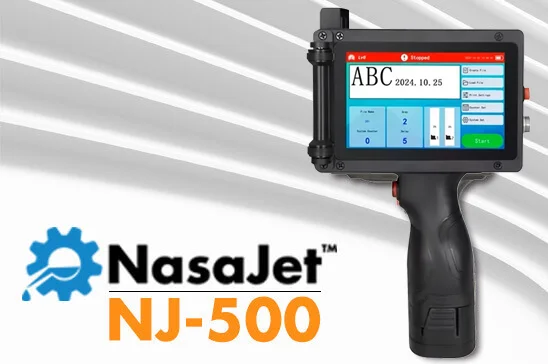
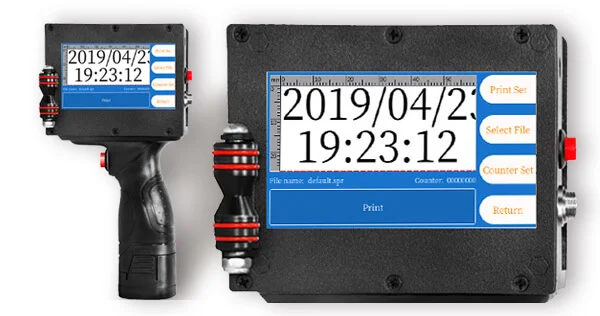
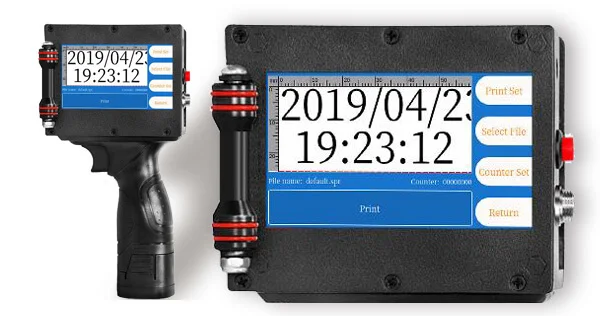
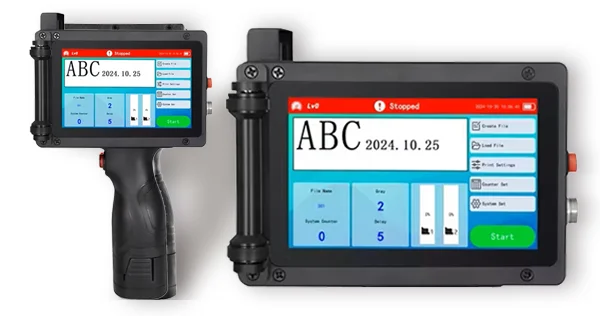
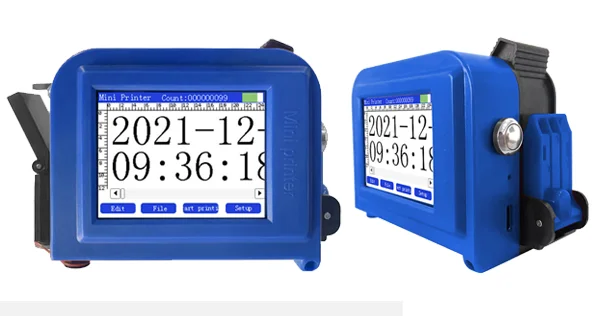
Handheld printers such as the NasaJet® NJ-100, NJ-200 and NJ-500 can print any combination of text, sequential numbers, QR codes, barcodes, monochrome graphics, dates and times. Depending on the model, the maximum print height ranges from 12 to 50 mm.
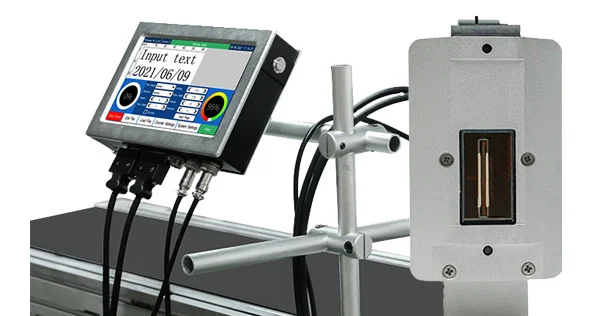
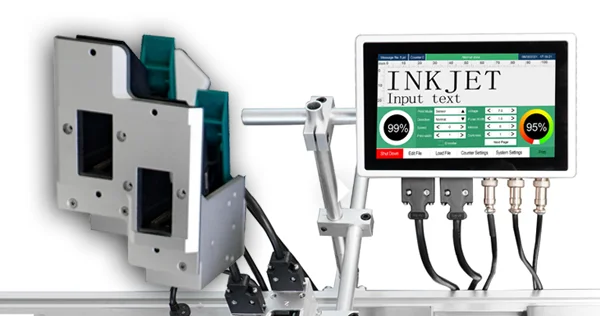
Marking Building and Construction Materials with the NasaJet® NJ-1000 and NJ-2000
For applications where building materials are manufactured on existing production lines, stationary marking solutions
may be more suitable than handheld printers. With our two models, the NasaJet® NJ-1000 and NJ-2000,
we offer systems that operate on the same principle as our handheld printers and provide almost identical functionality.
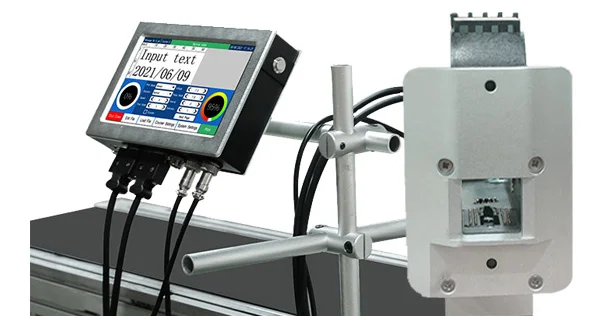
The marking systems consist of a touchscreen control unit and a printhead connected by cable. The printhead can be mounted
directly on existing conveyor systems. Both systems can be easily and universally integrated into existing production lines,
even as retrofits, thanks to the option of external sensor control (e.g. photoelectric sensors).
The proven TIJ principle makes it possible to print on almost any type of surface (smooth, curved, rough, etc.) and a wide
range of materials (glass, plastic, wood, metal, etc.).
We would be happy to demonstrate our NasaJet® printers for marking building materials. Simply give us a call.
Frequently Asked Questions About Marking Building Materials
Why mark building materials?
There are many applications where marking building materials is useful. For example, clearly marking components used in roof construction or prefabricated houses can make assembly easier and faster. Traceability also makes it easier to respond to product issues or source replacement building materials.
What is an easy way to mark building materials?
Inkjet-based marking systems, such as handheld printers, are ideal for marking building materials. Handheld printers can produce markings of virtually any length or complexity, including barcodes, QR codes and sequential numbers.
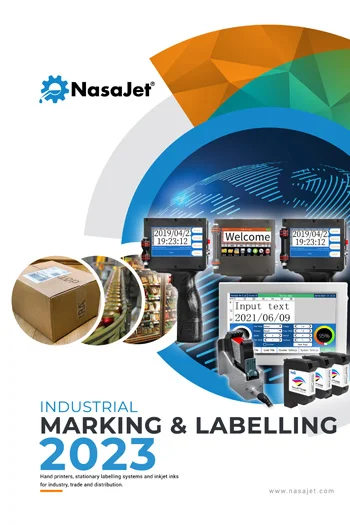
NasaJet® Brochure
"Industrial marking" 1,4 MB
NasaJet® NJ-500
Datasheet 0,5 MB
NasaJet® NJ-200
Datasheet 0,6 MB
NasaJet® NJ-100
Datasheet 0,5 MB
NasaJet® NJ-5000
Datasheet 0,5 MB
Advantages TIJ labelling
- Razor-sharp print image
- High print speeds
- Low printing costs
- Low noise level
- Practically maintenance-free
- Multiple print formats (text, date, counter, barcodes, QR codes, graphics,...)
- Suitable for almost any substrate due to different inks (paper, plastic, metal, textiles,
rubber, wood,...)



Copyright ©Geotechtronics GmbH, GERMANY • Handheld mobile printer - portable printing solution.