



-
Geotechtronics GmbH
Pollinger Str. 3 • D-82362 Weilheim i.OB -
Office hours
Mo-Sa: 9:00-18:00
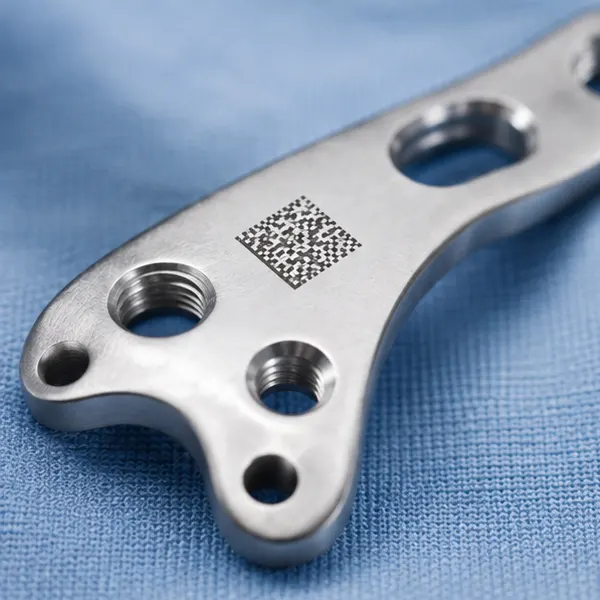
UDI marking with laser technology is a particularly reliable method for permanently and machine-readably marking medical devices. A laser can be used to apply UDI codes, DataMatrix codes, serial numbers, batch numbers and other product information directly to the surface of a medical device. The marking is precise, durable and can also be applied to small or difficult-to-access components.
Especially for surgical instruments, implants and medical components, durable identification plays an important role. The marking must remain reliably readable even after cleaning, disinfection, sterilization and intensive use. Laser marking for UDI provides a powerful solution for this purpose and is suitable for a wide range of metals, plastics and other materials.
What Is UDI Marking?
UDI stands for Unique Device Identification. Unique product identification is intended to ensure that medical devices can be identified and traced throughout their entire lifecycle. UDI marking basically consists of a unique identifier that can be represented in both human-readable and machine-readable form.
DataMatrix codes are particularly suitable for machine-readable representation. Depending on the product and regulatory requirements, they may contain information such as product identification, batch number, serial number, or manufacturing or expiration date. The marking supports, among other things:
- the unique identification of medical devices
- the traceability of products and batches
- secure documentation throughout the supply chain
- the automated capture of product information
- the assignment of products to production and quality data
- the improvement of processes in hospitals and medical facilities
The specific design of the UDI marking depends on the respective product, market and applicable regulatory requirements.
UDI Laser Marking on Surgical Instruments
One particularly important application of UDI laser marking is surgical instruments. Scalpels, clamps, tweezers, forceps, surgical tools and many other instruments are regularly cleaned, disinfected and sterilized.
An adhesive label can be problematic under these conditions. Conventional printing methods are also not suitable for every application. A laser marking applied directly to the surface, on the other hand, can provide a significantly more durable solution. Typical applications include:
- surgical instruments
- endoscopy instruments
- orthopedic instruments
- dental instruments
- surgical handpieces
- medical tools
- instrument sets
- reusable medical devices
Especially for reusable instruments, permanent identification can support traceability and automated data capture in medical environments.
Laser Marking of Implants
Laser marking is also an interesting option for implants and medical components. Very small DataMatrix codes and other markings can be applied to limited surface areas. Typical examples include:
- orthopedic implants
- bone plates
- screws and fastening components
- surgical components
- implant components
- medical metal components
For such applications, high precision and controlled processing are particularly important. The marking must not impair the function of the component. At the same time, the code must remain reliably readable under the intended conditions.
UDI Marking on Stainless Steel
Stainless steel is one of the most commonly used materials for medical instruments. With suitable laser systems, the material can be marked with a high degree of precision.
Depending on the surface and the desired result, a dark contrast marking or annealing color can be produced, for example. This makes it possible to create DataMatrix codes even on comparatively small surfaces.
When selecting the laser marking process, factors such as the following must be taken into account:
- stainless steel alloy
- surface characteristics
- material thickness
- required marking depth
- required contrast
- UDI code size
- cleaning and sterilization
- durability requirements
Careful adjustment of the laser parameters is essential to achieve consistent, high-quality marking.
UDI Marking on Titanium and Other Metals
In addition to stainless steel, numerous other metals are used in medical technology. These include, for example, titanium, aluminum and various special alloys. Titanium is particularly important for medical and implantable components. Here too, laser marking can provide a durable means of identification.
However, the optimal laser parameters vary depending on the material. A process that produces high contrast on stainless steel is not automatically suitable for titanium or another alloy. Therefore, UDI laser marking should always be adapted to the specific material and the individual component geometry.
Marking DataMatrix Codes with a Laser
The DataMatrix code is particularly interesting for many UDI marking applications. It can store a relatively large amount of information in a small area, making it suitable for compact medical devices as well.
During laser marking, the code image is created from a large number of small modules. It is essential that the individual elements are displayed precisely and reproducibly. A high-quality laser marking should therefore not only look visually good. Above all, reliable machine readability is crucial.
For quality assurance, suitable camera systems and code verification devices can be used, for example. These systems can check whether the marked code meets the specified requirements for contrast and readability.
Combining Laser Marking and Code Verification
A modern production line for medical devices can connect the individual process steps. The UDI code is first generated from production data and then transferred to the product using a laser marking system. After marking, a camera can automatically verify the code.
A possible process could look like this:
Product Feeding → Identification → UDI Data Transfer → Laser Marking → Code Verification → Documentation → Release
This makes it possible to integrate marking into automated production and traceability processes. Automatic verification is particularly useful for high production volumes, as defective or incomplete markings can be detected during production.
Advantages of UDI Laser Marking
Laser marking offers several advantages for UDI marking.
Permanent Marking
The marking is created directly on or within the material surface. As a result, it can be significantly more durable than an adhesive label.
High Precision
Lasers operate without physical contact and enable extremely fine markings. This is particularly advantageous for small DataMatrix codes and compact medical components.
Small Marking Areas
Very compact codes can also be produced on small components. This makes the technology suitable for numerous surgical instruments and medical components.
High Reproducibility
With correctly defined laser parameters, many identical products can be marked with consistent marking quality.
Automation
Laser marking systems can be integrated into production lines, assembly systems and automated inspection systems.
No Consumables Such as Ink
Direct laser marking does not require printing inks or labels. This can simplify the process and reduce the need for consumables.
UDI Laser Marking in Production
The requirements for UDI marking go beyond the actual marking process. In industrial production, product data, the marking process and quality control must work together reliably.
A laser marking system can, for example, be connected to higher-level production software or a database. This allows the individual UDI code for each product to be transferred automatically to the marking system. This can reduce manual data entry and help prevent mix-ups.
A typical industrial solution can include the following components:
- laser marking system
- product fixture or positioning system
- industrial camera
- code reading system
- PLC or machine control system
- production database
- MES or ERP integration
- automatic rejection of defective products
This makes UDI marking an integrated part of the production process.
Traceability of Medical Devices
One of the key benefits of unique product identification is traceability. By combining UDI, production data and internal systems, products and batches can be identified more effectively and associated with relevant production information.
A permanently marked identification can also remain in place while a medical device passes through various processing steps.
This is particularly interesting for reusable surgical instruments. For example, an instrument can be uniquely identified during reprocessing, storage and use, provided that the corresponding systems and processes support this.
Quality Requirements for Laser Marking
UDI marking must not only be durable but also reliably readable. Therefore, the quality of the marking should already be taken into account during development and process validation.
Important factors include:
- sufficient contrast
- defined module size of the DataMatrix code
- precise geometry
- uniform marking
- appropriate marking depth
- low thermal impact, where required
- resistance to the intended cleaning and sterilization processes
- reliable machine readability
Depending on the application, code verification using suitable inspection methods may be useful or required.
Individually Adjusting Laser Parameters
Optimal UDI laser marking cannot be determined solely by laser power. The interaction of various parameters is crucial. These include, for example:
- laser power
- pulse duration
- pulse frequency
- scanning speed
- focus
- line spacing
- number of passes
- marking strategy
The surface of the medical device also affects the result. Brushed, polished, coated or blasted surfaces can produce different marking results.
For this reason, testing with the original material is recommended before series production. Different laser parameters can be tested and subsequently evaluated in terms of contrast, readability and durability.
UDI Laser Marking for Different Materials
Laser technology offers interesting possibilities not only for metal medical devices. Various plastics can also be suitable for UDI laser marking. For plastics, for example, a high-contrast color change or foaming effect can be produced. The material composition, pigmentation and laser technology used are decisive factors.
Depending on the product, the following materials may be suitable:
- stainless steel
- titanium
- aluminum
- various metal alloys
- engineering plastics
- medical-grade plastics
- coated surfaces
Suitability should always be evaluated based on the specific material and the required marking quality.
UDI, Laser Marking and Industrial Automation
The combination of UDI marking, laser marking and industrial automation enables end-to-end identification directly within the manufacturing process. Instead of manually marking individual products, product data can be transferred automatically to the marking system. The laser system then creates the individual identification.
An integrated camera can immediately verify whether the DataMatrix code has been correctly applied. This creates an automated process in which marking and quality control are directly linked.
UDI Marking with Laser Technology
UDI marking using laser technology provides a precise and durable way to uniquely identify medical devices. The technology is particularly interesting for surgical instruments, implants and medical components made from stainless steel, titanium and other materials.
DataMatrix codes can be applied directly to the product on small surfaces and subsequently read and verified automatically. In combination with camera systems, production controls and databases, UDI marking can be integrated into modern manufacturing and traceability processes.
For a reliable solution, material, laser technology, code size, marking parameters, durability and inspection methods should be individually adapted to the respective medical device. Testing with the original material followed by an evaluation of the marking quality is therefore an important step toward stable UDI laser marking.
Laser marking for UDI is therefore not simply a method for marking medical devices, but can also be a key component of an automated and traceable production and quality strategy.



Copyright ©Geotechtronics GmbH, GERMANY • Handheld mobile printer - portable printing solution.