



-
Geotechtronics GmbH
Pollinger Str. 3 • D-82362 Weilheim i.OB -
Office hours
Mo-Sa: 9:00-18:00
Modern Coding and Marking Technology - Coding, Labeling, Marking and Printing
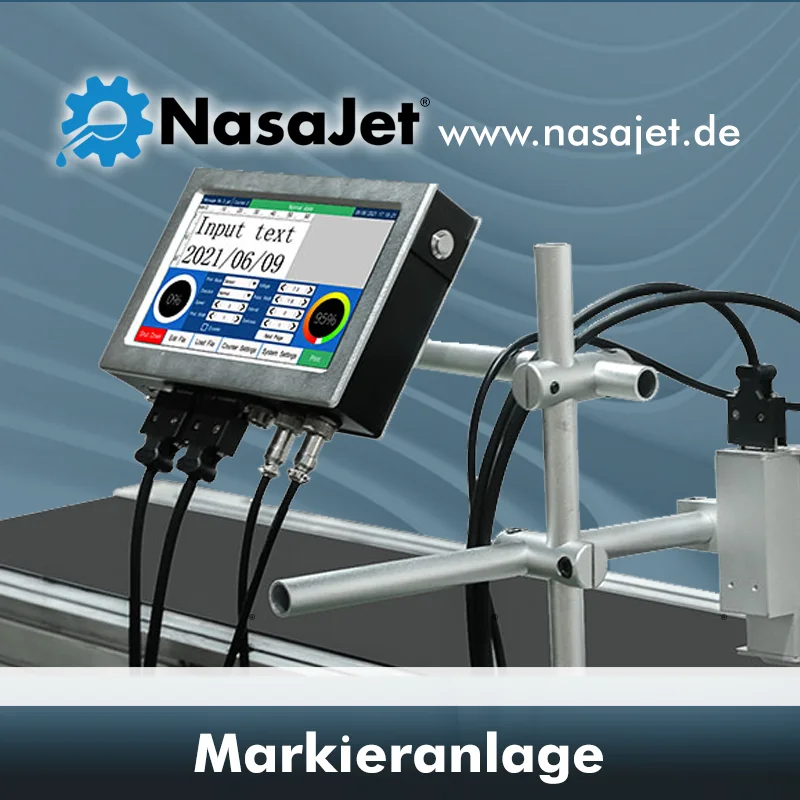
The use of modern coding and marking technology is now virtually indispensable in industry and commerce. In addition to meeting legal requirements, an increasing amount of voluntary information and metadata for optimized production and logistics must be applied to products, product packaging and shipping materials. Coding and marking technology can be categorized according to the underlying marking principle. Today, the most common methods are labels, lasers and, above all, ink. While laser marking is primarily used where high precision and long-lasting markings are required (for example, on metal components in the automotive and mechanical engineering industries), adhesive labels are still more of an expression of "workarounds" and makeshift solutions. Adhesive labels can be used in almost any situation, but they also generate the highest costs, as in addition to the actual printing costs, there are significant material costs.
The many advantages of ink-based coding and marking technology have paved the way for its success in recent years. Thanks to the wide variety of available inks, it can be used for virtually any application, while continuous miniaturization has made the required technology practical for almost every use case. Printing costs remain manageable and, above all, predictable. For most applications, inkjet coding and marking technology is therefore the most economically viable option today.
What is Coding and Marking Technology?
Coding and marking technology encompasses all processes and technologies used to apply information permanently or temporarily to products, components or packaging. These include conventional printing processes, laser-based marking and labeling systems.
The aim is to make important information visible and readable for manufacturers, retailers, authorities and end consumers.
Common Methods in Coding and Marking Technology
Marking can be carried out in various ways:
Labeling
Application of self-adhesive labels, often featuring a barcode or QR code.
Inkjet Printing
Flexible printing for variable data such as batch numbers or expiration dates.
Laser Marking
Permanent and tamper-resistant marking on metals, plastics or glass.
Thermal Transfer Printing
High-resolution printing technology, frequently used for labels in logistics and the food industry.
Embossing and Engraving
Robust and durable methods for industrial applications.
Thermal Inkjet Coding and Marking Technology
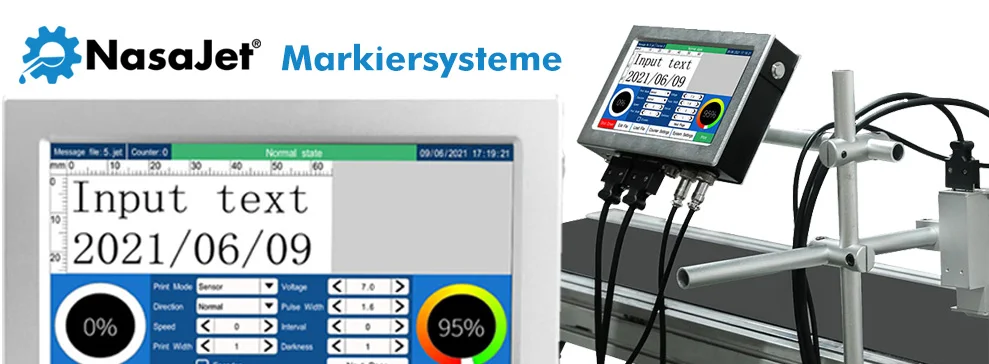
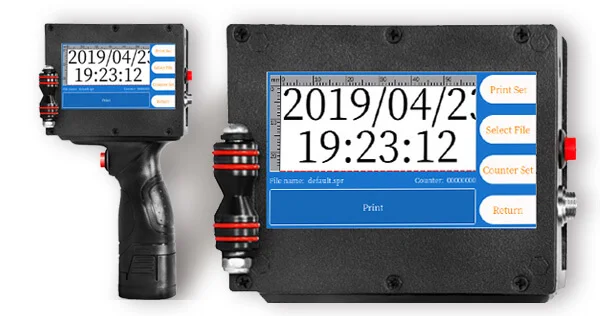
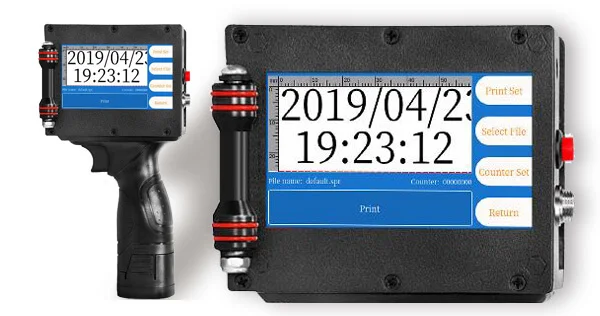
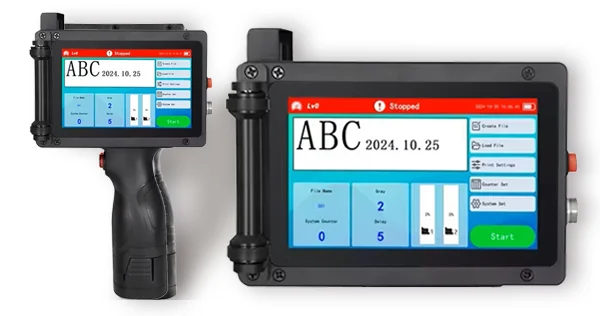
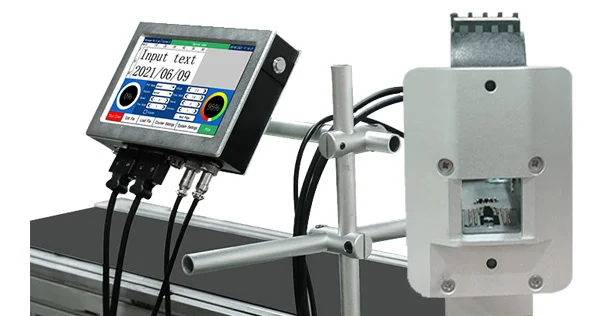
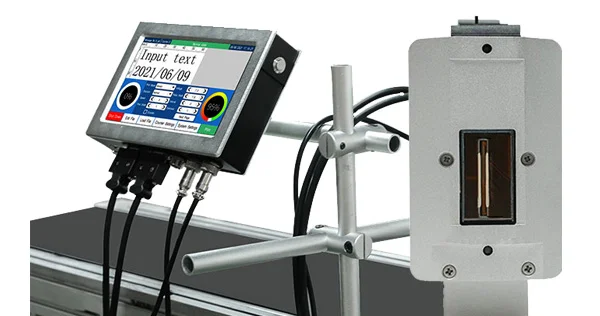
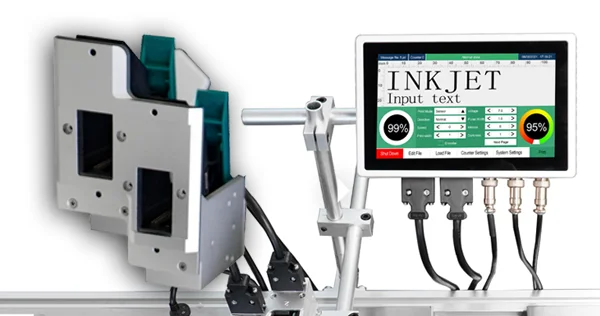
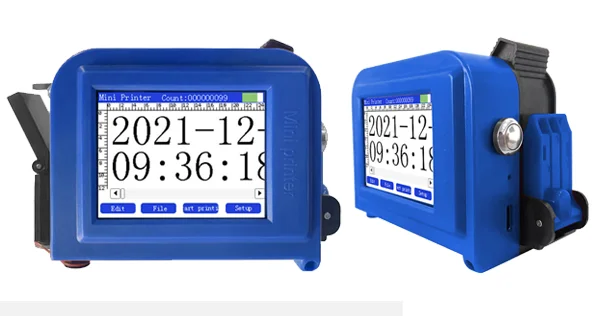
Thermal Inkjet (TIJ) technology from Hewlett Packard has become the de facto standard in many areas of industrial printing. The ink cartridges contain the actual printhead themselves. The individual nozzles of the printhead can be controlled externally via electrical contacts on the ink cartridge. The "printer" itself is therefore only about the size of a conventional ink cartridge (or, in the case of large-character systems, several offset cartridges). The control unit generally consists only of a computer connected by cable, with a display or touchscreen for entering print data. This separation of the printing and control units makes Thermal Inkjet systems easy to integrate into existing production lines. Miniaturization of coding and marking technology into portable handheld printers was also made possible by TIJ.
Thermal Inkjet can produce virtually any print format because the individual nozzles of the printhead can be freely controlled. In practice, almost all models can print text, numbers, characters, sequential numbers (counters), dates, barcodes and QR codes. Monochrome graphics and therefore also Data Matrix codes are possible with almost all devices. The different print formats can also generally be combined into templates, allowing all required information to be printed in a single printing operation.
The standard print height for TIJ is half an inch, or approximately 12 mm. Larger print outputs are possible with special 1-inch ink cartridges (approximately 25 mm) or systems that control any number of individual printheads positioned vertically offset from one another. This makes print heights of 5 cm or more possible.
Requirements for Industrial Coding and Marking Technology
In addition to its application-specific advantages, TIJ also offers a number of practical benefits. This coding and marking technology can provide very high printing speeds. Printing speeds of 60 m/min are already standard, while specialized systems can achieve more than 100 m/min. Print quality can be adjusted as required. Where excellent readability and durability are important, high-quality printing can be selected. Where only temporary information is required (e.g. for shipping and logistics), consumables can be reduced instead.
TIJ coding and marking technology is also extremely robust. It is relatively resistant to external influences such as dust and moisture. The ink-based coding and marking technology can also handle temperature fluctuations well.
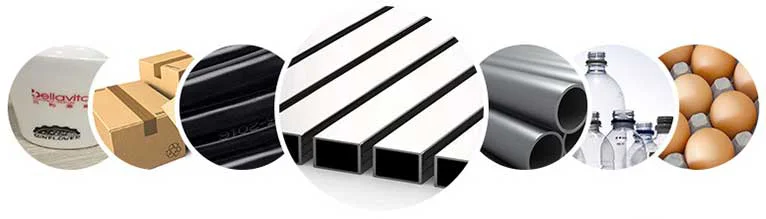
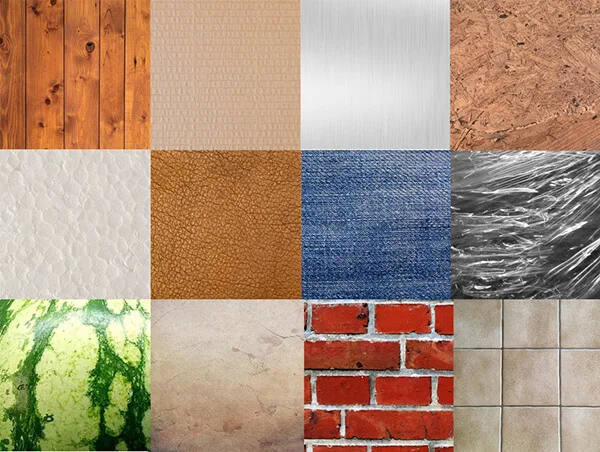
Examples of materials and products that can be printed using TIJ coding and marking technology: paper, cardboard, cartons, wood, plastic (wastewater pipes, electrical cables,...), plywood, fabrics and textiles, cloths, CDs, DVDs, canvas, cotton, glass, concrete (e.g. sewer pipes, prefabricated components), metal (rims, cans, containers, drums), film (stretch film, plastic bags), sheet metal, leather, rubber (carpet backing, hoses, cables), ceramics (tiles), porcelain, synthetic resin, foams (PUR foam, cold-cure foam, composite foam, PE foam) and even organic substrates (plants, melons and other food products).
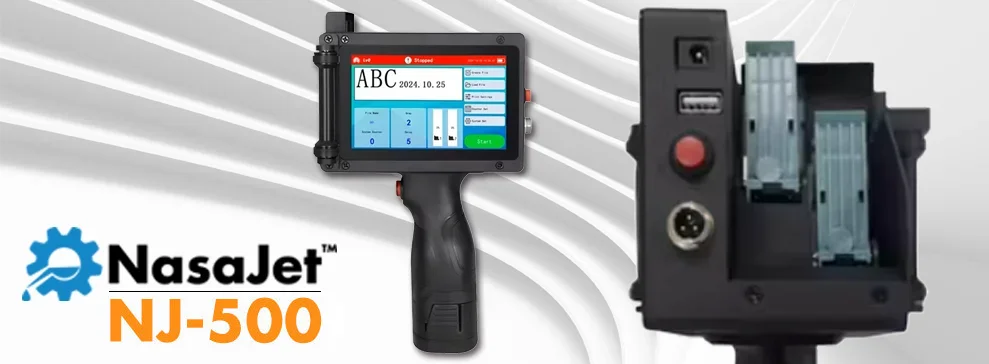
NasaJet® Inkjet Coding and Marking Systems and Coding and Marking Technology
NasaJet® is your specialist for industrial coding, marking and printing applications. In addition to stationary coding and marking systems,
we also offer portable handheld printers as well as a wide range of professional printing inks
for industrial and commercial applications.
Contact us with your commercial printing and coding challenges. Whether in production, shipping or retail, we will be happy to show you how you can use NasaJet® coding and marking technology to increase your efficiency and improve your quality.
Simply contact us.
Looking for Laser Coding and Marking Technology?
In addition to our high-quality TIJ printing solutions, we now also offer a range of portable and stationary handheld laser marking systems for laser marking and laser engraving. See our Laser Marking page or simply give us a call.
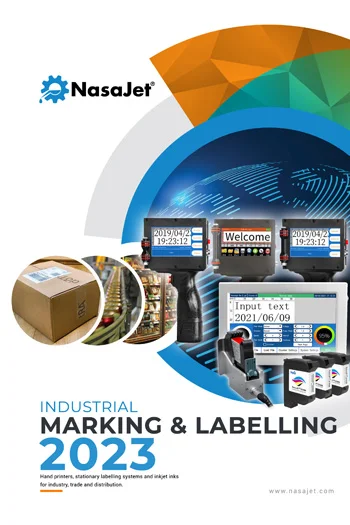
NasaJet® Brochure
"Industrial marking" 1,4 MB
NasaJet® NJ-500
Datasheet 0,5 MB
NasaJet® NJ-200
Datasheet 0,6 MB
NasaJet® NJ-100
Datasheet 0,5 MB
NasaJet® NJ-5000
Datasheet 0,5 MB
Advantages TIJ labelling
- Razor-sharp print image
- High print speeds
- Low printing costs
- Low noise level
- Practically maintenance-free
- Multiple print formats (text, date, counter, barcodes, QR codes, graphics,...)
- Suitable for almost any substrate due to different inks (paper, plastic, metal, textiles,
rubber, wood,...)



Copyright ©Geotechtronics GmbH, GERMANY • Handheld mobile printer - portable printing solution.